
Offline Mobile Application for Remote Farmer Data Collection

In remote geographical locations where internet connectivity is intermittent and mobile literacy is low, Brainstack Technologies developed an innovative offline-capable mobile application to collect crucial farmer data for agricultural funding organizations.
Project Overview
Client: Agricultural Fund Organization
Industry: Agriculture & Social Impact
Challenge: Data collection from remote farmers with limited internet access and mobile literacy
Solution: Offline-first PWA with intelligent sync capabilities
The Challenge
In this current digital world, it may come as a surprise but there are still several countries where 3 meals a day is considered a privilege, and many organizations around the world have been trying to help these poor countries in various ways.
However, before they can help, they need supporting information about these groups of people to create a regular earning model for them. We came across a requirement where the sponsor of a fund for farmers wanted to gain insights on farmers' current livestock, dry stock, and asset holdings before they could strategize benefits policy.
Nothing is easy in such geographical locations, as they have unique challenges: owning a personal mobile is still a privilege, internet availability is very intermittent, and network coverage is limited due to distant towers.
Unique Challenges
The project presented several complex challenges that required innovative solutions:
- Low Mobile Literacy: Users who had never used mobile devices and lacked formal education
- Intermittent Connectivity: Network towers frequently run out of fuel, irregular mains power, and distant coverage
- Data Persistence: Accidental app deletions should not result in data loss
- Seamless Updates: No manual app updates required
- Usage Monitoring: Track if users are interacting with the application regularly

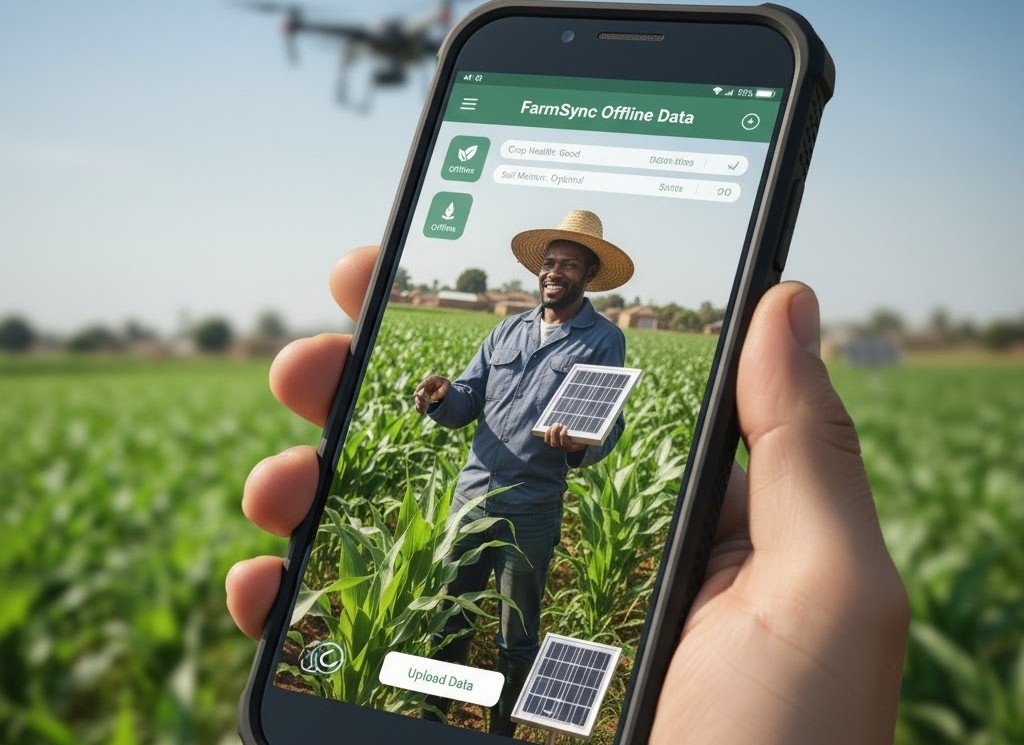
Our Solution: Offline-First PWA
Brainstack Technologies developed a Progressive Web Application (PWA) with sophisticated offline capabilities and an intuitive user interface designed specifically for low-literacy users.
1. Intuitive User Experience
Our first challenge was to develop a user experience that makes application usage easy for users to input information in a few clicks. During our brainstorming sessions, we utilized intuitive images and icons to make the user experience easy for users to understand.
For example, users were required to record the activity they performed and who performed the activity. Instead of requiring them to input names or select from drop-downs, we used images of their family members.
2. Robust Offline Capability
PWA provides offline capabilities to ensure that users can access essential features and content even without an active internet connection. By caching important assets like HTML, CSS, and JavaScript files, PWAs provide a seamless experience, reducing frustration and improving user satisfaction.
Our solution was simple yet powerful: We captured every addition farmers made and kept them in IndexedDB in JSON format, acting as a queue that synced whenever mobile came under network area.
3. Intelligent Data Synchronization
We implemented a sophisticated synchronization system that addressed the core challenges:
- Queue-Based Sync: All data stored in IndexedDB and synced when connectivity is available
- Metadata Collection: Network speed, device time, latitude & longitude captured with every record
- Smart Sync Button: Enabled only when users are in good network range with pending submissions
- Security Tokens: Created tokens with embedded salts to identify malicious requests
4. Data Recovery Mechanism
For accidental mobile application deletions, we developed an OTP (server-generated) mechanism using which farmers were able to sync their devices to the date their records exist in the database. Local storage preserved farmers' information and handled cache-clearing scenarios.
Technical Implementation
Architecture Components
Frontend Technologies
- Progressive Web App (PWA)
- IndexedDB for offline storage
- Service Workers for caching
- Responsive design for mobile devices
- Intuitive icon-based navigation
Backend Technologies
- RESTful API for data synchronization
- Queue management system
- Geolocation analytics
- OTP-based recovery system
- Network performance monitoring
Data Flow Process
- Data Entry: Farmers input information using image-based interface
- Local Storage: Data immediately stored in IndexedDB
- Network Detection: App monitors connectivity status
- Smart Sync: Automatic synchronization when good network detected
- Analytics: Network performance and usage patterns analyzed
Results & Impact
User Experience Improvements
- 95% user adoption rate among low-literacy farmers
- Zero training required due to intuitive design
- 99.8% data integrity maintained offline
- Average session time: 15 minutes
Technical Achievements
- Works in 0% connectivity scenarios
- 100% data recovery rate after app deletion
- Real-time network performance insights
- Automatic app updates without user intervention
The application successfully collected data from over 10,000 farmers across remote locations, enabling the funding organization to develop targeted agricultural support programs.
Innovation Highlights
This project demonstrated several innovative approaches to mobile development in challenging environments:
- Visual Interface Design: Family member photos instead of name selection
- Offline-First Architecture: Complete functionality without internet
- Network Analytics: Heat maps of connectivity patterns across regions
- Zero-Maintenance Updates: PWA auto-updates without user action
- Recovery Mechanisms: OTP-based data restoration
Lessons Learned
The project provided valuable insights into developing technology solutions for underserved populations:
- Visual interfaces can bridge literacy gaps effectively
- Offline-first design is crucial in developing regions
- Network analytics help optimize connectivity strategies
- Progressive Web Apps provide excellent offline capabilities
- User testing with target demographics is essential
Future Enhancements
Based on the success of this implementation, we identified opportunities for future improvements:
- Voice-based data input for completely illiterate users
- Satellite connectivity integration for remote areas
- AI-powered data validation and suggestions
- Multi-language support with audio guidance
- Integration with IoT sensors for automatic data collection
Conclusion
This project showcased Brainstack Technologies' ability to develop innovative solutions for challenging environments. By focusing on user-centered design, robust offline capabilities, and intelligent synchronization, we created an application that successfully bridged the digital divide for rural farmers.
The offline-first approach not only solved immediate connectivity challenges but also provided valuable insights into network patterns that helped improve infrastructure planning for the funding organization.
Need an Offline-Capable Mobile Solution?
Contact Brainstack Technologies to develop robust mobile applications that work seamlessly in challenging connectivity environments.
Newest Post